-
Welcome to the Checkmate Community Forums forums.
» Interact with over 10,000 Checkmate Fanatics from around the world!
You are currently viewing our boards as a guest which gives you limited access to view most discussions, articles and access to our other FREE features.
By joining our free community you will be able to:
» Post topics and messages
» Post and view photos
» Communicate privately with other members
» Access our extensive gallery of old Checkmate brochures located in our Media Gallery
» Browse the various pictures in our Checkmate photo gallery
Registration is fast, simple and absolutely free so please, join our community today!
If you have any problems with the registration process or your account login, please contact support by clicking here or by using the"contact us" link at the bottom of the page.
You are using an out of date browser. It may not display this or other websites correctly.
You should upgrade or use an alternative browser.
You should upgrade or use an alternative browser.
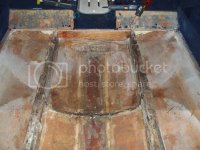
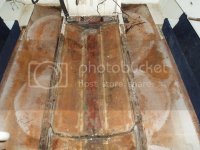
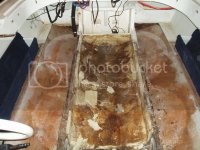
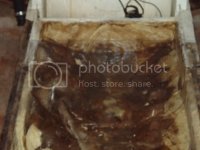
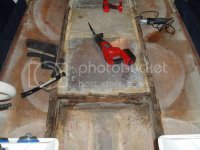
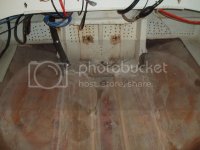
Starting floor stringer repairs
- Thread starter KevinR
- Start date

JUPITER PULSARE
Well-known member
If you're into the boat that deep allready, pull the fuel tank. There is a drainage sub floor under the tank that I guarantee is rotton. Short of Checkmate themselves, noone knows the guts of a Pulsare better than myself! Replace the sub floor with a piece of PVC pipe, fillayed in half and glassed to the hull under the fuel tank. Build your new stringers/bulkheads out of Mantex or Airex PXc coring. Only foam your tank back in..do not add foam to the outboard sides of the fuel tank or forward of the tank. As far as the floor is concerned, either 1/2 or 3/4" marine ply with one layer of 1708 glassed to the bottom and two layers glassed on top. I have a thread somewhere on the site with an entire rebuilding of a 1994 Pulsare 2100.....
Replace the sub floor with a piece of PVC pipe, fillayed in half and glassed to the hull under the fuel tank. Build your new stringers/bulkheads out of Mantex or Airex PXc coring. Only foam your tank back in..do not add foam to the outboard sides of the fuel tank or forward of the tank. As far as the floor is concerned, either 1/2 or 3/4" marine ply with one layer of 1708 glassed to the bottom and two layers glassed on top. I have a thread somewhere on the site with an entire rebuilding of a 1994 Pulsare 2100.....
KevinR
Active member
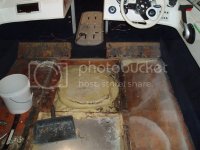
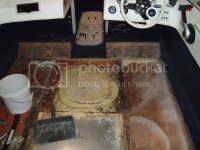
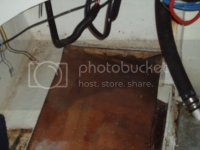
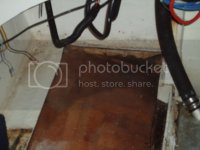
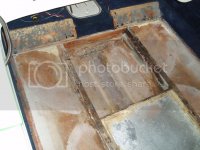
Thanks for the advice. I've printed up a bunch of the pictures from one of the links of your rebuild and plan on doing roughly the same thing with mine. I've done the floor on one other boat and agree the foam will not be going back in except to postion the tank. Also yeah the tank is coming out and getting cleaned and redone prior to going back with the same type of modifications you did under it. More pictures to come after the holiday. Happy Thanksgiving.

SKATR186
Active member
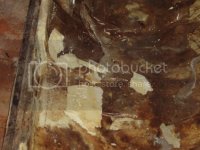
Looks close to mine, good work so far. I am thinking about cutting down the stringers in my 1997 to the good wood and sister up a new stringer to the old and glass in for additional strength. How soft are the stringers and how much of the total height is no good ? At least your ribs look a lot better then mine, taking out the soft ribs made it very easy to get the fuel tank out. Check out the pics of my 1997 to see how i got the tank out. That foam holds the fuel tank very well.
Mike
Mike
KevinR
Active member
Yeah I think I'm going to pull all the stringers out and start over. the only thing I'll leave is the front bulkhead and the trans knees. I found this stuff online and asked around about it to treat the wood on the trans called CPES. I really would like to pull the trans out to but at this time its just not going to happen. I'll keep posting ppics as I go along. Good luke on you project, keep posting pics.

Mark
Well-known member
CPES is just thinned epoxy and will only work to remedy very small areas that have rotted. If it is a mostly wet transom it will not provide any strength. Secondly, it will not adhere to anything that is still wet. You will need to drill small holes, some high and some low and send acetone through th top till it comes out the bottom. That will absorb the water. Then you need to force air through the holes to dry out the acetone. Then you inject the CPES through the top holes till it comes out the bottom ones and then plug the holes. But as I said it is not a structural fix as it will add no real strength. My advice, only use it if you are trying to fix a minor compromised transom.
KevinR
Active member
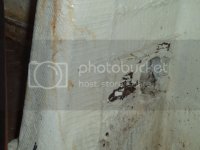
Thanks for the info on the CPES Mark. Before I deside to use it I'm going to drill some hole to see how bad the trans really is. If it's just the bottom corners that weren't glassed over (that suprised me) then I'll use it. If its farther than I thought then I guess I'll start getting ready to replace the whole thing.

JT Patroni
Well-known member
I think that if you find wet plywood in the bottom corners because there was no glass to protect, it you will find that the water has wicked up into the plywood beyond that area.
My Starflite had damaged glass at the bottom and the plywood was wet
all the way to the top. Damage will depend on how long water was allowed to make contact with the unprotected wood, also how well the thru hull fittings were sealed.
I am not trying to rain on your parade, just provide what I found in my boat.
My Starflite had damaged glass at the bottom and the plywood was wet
all the way to the top. Damage will depend on how long water was allowed to make contact with the unprotected wood, also how well the thru hull fittings were sealed.
I am not trying to rain on your parade, just provide what I found in my boat.

cturboaddict
Active member
Just remember, when your in there, your NOT going to want to go back in to replace a half @ssed repair to have it fail again later. Get it done right the first time and dont worry about it for years to come i say.Thanks for the info on the CPES Mark. Before I deside to use it I'm going to drill some hole to see how bad the trans really is. If it's just the bottom corners that weren't glassed over (that suprised me) then I'll use it. If its farther than I thought then I guess I'll start getting ready to replace the whole thing.
This situation came upon me when replacing my transom/stringers/deck/adding knee braces. I thought i could get away with leaving the transom untouched. Found one small spot at the bottom near the drain hole that was a bit wet. Thought i could leave it.... Thought about it more, and said to myself- I REALLY dont want to have to back in here later to fix it.. End result- Ripped it all out and replaced EVERYTHING.
As a friend told me-
Sound of mind, is a GREAT thing.